


How to build a skincare routine for your skin type

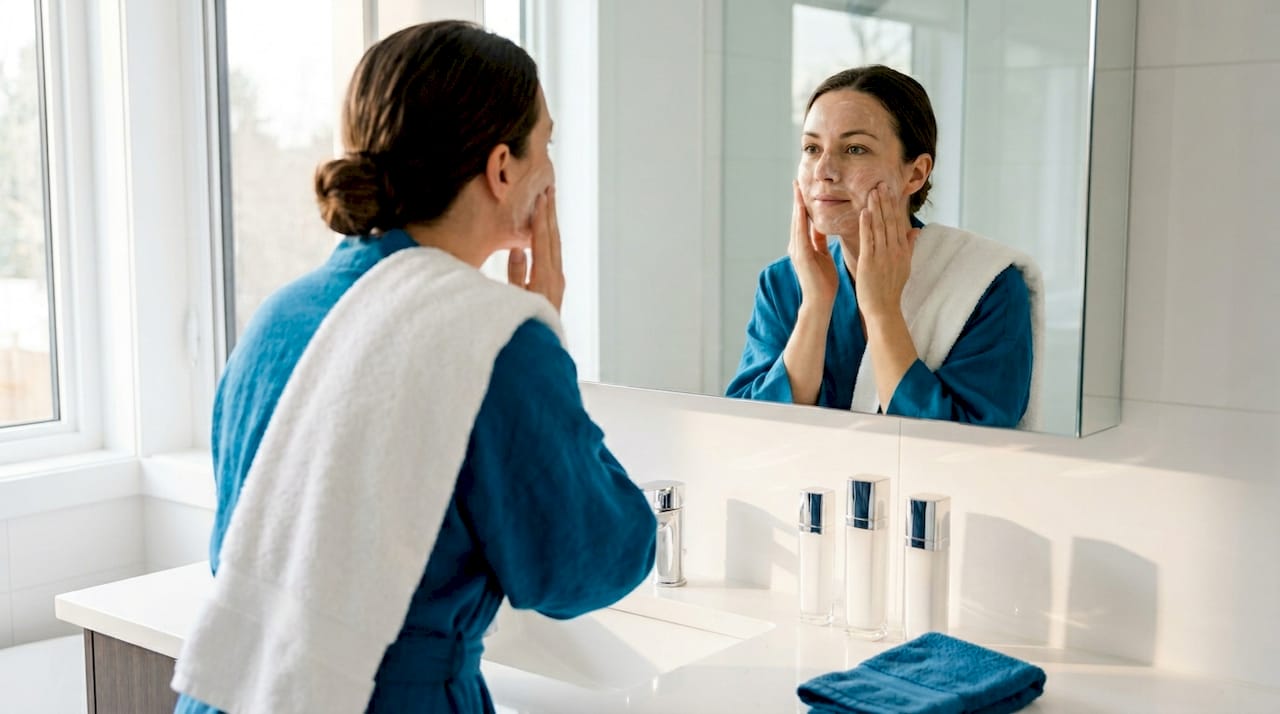
You’ve spent real money on serums, moisturizers, and treatments that promised everything and delivered almost nothing. The problem usually isn’t your skin. It’s that the products weren’t chosen for your skin. Skincare is not one-size-fits-all, and a routine built on guesswork will consistently underperform, especially when you’re dealing with post-acne scars, stubborn discoloration, or early signs of aging. What actually works is a precision-based approach: identify your true skin type, match it to evidence-backed ingredients, and build a routine that targets your specific concerns from the ground up.
Table of Contents
Key Takeaways
Point | Details |
Correct identification | Understanding your true skin type leads to better, safer, and more effective product choices. |
Expert-backed ingredients | Dermatologist-approved ingredients target specific concerns like acne, aging, and discoloration for optimal results. |
Routine customization | Tailor the order and timing of products to your skin’s needs, not generic routines. |
Value of professional care | Advanced treatments and expert guidance unlock transformations that over-the-counter products cannot achieve. |
Why accurate skin type identification matters
Most of us learned to categorize our skin in one of five ways: oily, dry, combination, sensitive, or normal. While these labels are a useful starting point, they’re far too broad to guide meaningful skincare decisions. Your skin’s actual behavior is shaped by dozens of factors, including climate, hormones, diet, stress levels, and even the products you’re currently using. Relying on a basic label often leads to mismatched products that either strip your skin or suffocate it.

Skin type identification beyond oily/dry confirms that skin can behave differently across seasons and life stages, and that traditional categories are simply too simple to capture that complexity. Someone with combination skin might have an oily T-zone in summer and feel dry everywhere in winter. That person needs a layered, adaptive approach, not a single product applied uniformly.
When you add specific concerns like hyperpigmentation, acne scarring, or fine lines into the picture, the need for precision becomes even greater. A dark spot on dry skin requires a different treatment strategy than the same dark spot on oily, acne-prone skin. The underlying cause, the texture of surrounding tissue, and the tolerance for active ingredients all differ.
Skin type | Key identifying traits | Common concerns |
Oily | Shine by midday, enlarged pores | Acne, blackheads, post-inflammatory marks |
Dry | Tightness, flaking, dullness | Fine lines, sensitivity, uneven texture |
Combination | Oily T-zone, dry cheeks | Balancing hydration, uneven tone |
Sensitive | Redness, stinging, reactive | Rosacea, irritation, broken capillaries |
Normal | Balanced, minimal concerns | Maintenance, early aging prevention |
Signs that your skin type may be more complex than one label:
You break out in some areas and peel in others
Your skin reacts differently to the same product in different seasons
You have both active acne and visible scarring simultaneously
Redness or flushing appears without obvious triggers
Pro Tip: Keep a skin journal for one week. Note how your skin feels in the morning, at midday, and after cleansing at night. This simple habit reveals patterns that no quiz or label can capture, and it gives you real data to share when you book professional treatments.
Essential skincare ingredients for each skin type
Once you know your skin’s true behaviors, ingredient selection becomes far more strategic. The skincare industry is flooded with products, but dermatologist consensus narrows the field considerably. A JAAD Delphi consensus study00612-7/abstract) confirms that cosmetic dermatologists agree on a core set of topical ingredients for the most common skin concerns, including acne, discoloration, and aging. That consensus is your shortcut to effective choices.
Skin type/concern | Recommended core ingredients | Ingredients to avoid |
Oily/acne-prone | Benzoyl peroxide, salicylic acid, niacinamide | Heavy oils, comedogenic emollients |
Dry/dehydrated | Hyaluronic acid, ceramides, squalane | High-concentration alcohol, strong acids |
Hyperpigmentation | Vitamin C, azelaic acid, kojic acid, niacinamide | Unprotected sun exposure, harsh scrubs |
Aging/fine lines | Retinoids, peptides, vitamin C, SPF | Skipping sunscreen, over-exfoliating |
Sensitive/reactive | Centella asiatica, allantoin, low-dose azelaic acid | Fragrance, essential oils, high-pH cleansers |
Reading a product label well is a skill worth developing. Ingredients are listed in descending order of concentration, so the first five ingredients make up the bulk of the formula. If niacinamide appears near the bottom of a long list, the concentration is likely too low to produce visible results. Look for key actives in the top third of the ingredient list for meaningful efficacy.
How to patch test a new product correctly:
Apply a small amount of the product to the inner forearm or behind the ear.
Leave it on for 24 hours without washing the area.
Check for redness, itching, swelling, or breakouts.
If no reaction occurs, apply to a small area of the face for 3 to 5 days.
Only integrate fully into your routine after confirming no adverse response.
Skipping this step is one of the most common reasons people attribute breakouts or irritation to a “bad” product when the real issue is a reaction to a specific ingredient. Patch testing takes patience, but it saves weeks of unnecessary skin damage. Once you’ve identified your key ingredients, you can see treatment packages that incorporate professional-grade versions of these actives for faster, more controlled results.
Building your customized skincare routine
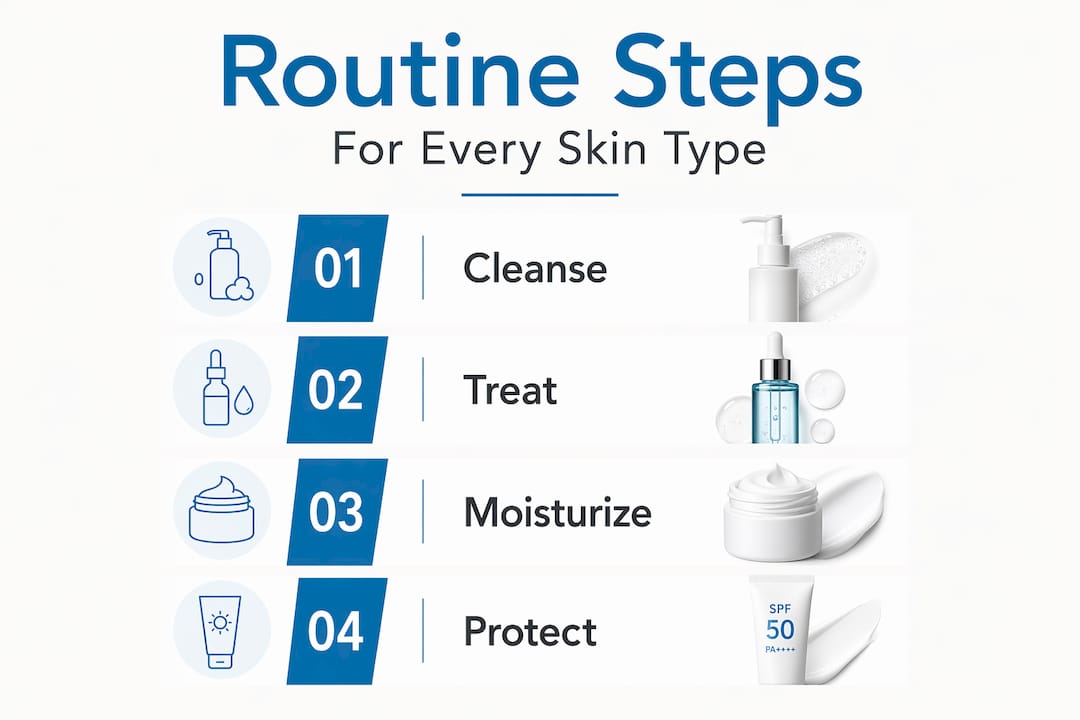
Knowing what works is only half the equation. How you layer and introduce products determines whether your skin thrives or reacts. A well-structured routine follows a consistent order: cleanse, treat, moisturize, and protect. Deviating from this sequence reduces ingredient effectiveness and can cause unnecessary irritation.
A practical daily routine framework:
Cleanse with a gentle, pH-balanced cleanser suited to your skin type. Avoid foaming cleansers with sulfates if your skin is dry or sensitive.
Treat with your targeted active, whether that’s a vitamin C serum in the morning or a retinoid at night.
Moisturize to lock in hydration and support your skin barrier. Even oily skin needs moisture.
Protect with a broad-spectrum SPF 30 or higher every morning, without exception.
Introducing actives like retinoids or chemical exfoliants requires a gradual approach. Experts recommend spacing strong actives to minimize irritation in acne-prone and sensitive skin, rather than layering multiple potent ingredients at once. Start with the lowest available concentration and use it two to three times per week before building up to nightly use over four to six weeks.
“Exfoliate based on your skin’s actual tolerance, not on a fixed schedule. Two to three times per week is a ceiling for most skin types, not a target.”
Pro Tip: Space your actives on alternate nights when you’re first introducing them. For example, use a retinoid on Monday, Wednesday, and Friday, and a chemical exfoliant on Tuesday and Thursday. This prevents cumulative irritation while still delivering results.
Hydration layering is another often-overlooked strategy. Applying a hydrating toner or essence before your serum creates a moist surface that helps active ingredients absorb more evenly. For those exploring Plasma Fibroblast procedures or similar resurfacing treatments, maintaining a strong skin barrier through consistent moisturization is essential both before and after the procedure.
Upgrading results with in-office and advanced treatments
At-home routines build the foundation, but some concerns simply require professional intervention to see meaningful change. Post-acne scarring, deep hyperpigmentation, and significant skin laxity respond far better to targeted in-office procedures than to topical products alone. The American Academy of Dermatology confirms that multiple in-office options exist for sun damage and aging, including prescription retinoids, chemical peels, and laser resurfacing, each suited to different skin types and concern depths.
Procedure type | Best-fit concerns | Key consideration |
Chemical peels | Discoloration, texture, mild scarring | Depth varies; superficial to deep |
Laser resurfacing | Fine lines, sun damage, deeper scars | Requires downtime and strict SPF |
Microneedling | Acne scars, collagen stimulation | Multiple sessions typically needed |
Plasma fibroblast | Skin laxity, fine lines, texture | Non-surgical, precise application |
Paramedical tattooing | Scar camouflage, vitiligo, areola | Highly specialized technique |
Photoprotection is not optional when you’re pursuing any of these treatments. UV exposure after a peel or laser session can cause post-inflammatory hyperpigmentation that’s worse than the original concern. SPF is the single most protective step in any skincare plan, and it’s non-negotiable.
Signs you may benefit from a professional assessment:
Scarring that hasn’t responded to six or more months of topical treatment
Discoloration that deepens or spreads despite using brightening ingredients
Skin laxity or texture changes that feel beyond what products can address
Sensitivity or reactivity that makes it difficult to tolerate most actives
Desire for faster, more controlled results than at-home products can deliver
Pro Tip: Prep your skin with at least four weeks of consistent SPF use before any in-office procedure. This reduces the risk of post-treatment pigmentation and helps your provider assess your true skin tone without UV-related interference. When you’re ready, book an in-office consultation to discuss which procedure aligns with your goals and skin condition.
What most people miss when choosing skincare
Here’s the uncomfortable truth: most skincare disappointment isn’t caused by bad products. It’s caused by a mismatch between the approach and the actual problem. People layer trending actives without understanding how they interact. They buy serums based on influencer recommendations rather than their own skin’s documented behavior. And they wait far too long before seeking professional guidance, often after months of unnecessary trial and error.
The contrarian view worth considering is this: a multi-step, product-heavy routine is not a sign of commitment to your skin. It’s often a sign of confusion. More steps mean more variables, more potential irritants, and more opportunities for products to cancel each other out. A two-step routine built on the right ingredients for your skin will consistently outperform a ten-step routine assembled from trend-driven choices.
“Don’t expect durable improvement without matching your approach to your specific problem. Generic routines produce generic results.”
A provider-led assessment changes this entirely. Rather than guessing, you get a clear picture of what your skin actually needs. Matching ingredient class and procedure depth to your skin type is how lasting improvement happens. A professional can identify whether your hyperpigmentation is epidermal or dermal, which determines whether a topical brightener will work or whether a peel or laser is the more appropriate path.
Seeking professional input earlier also saves money in the long run. The average person spends significantly more on ineffective over-the-counter products over two years than they would on a single consultation and targeted treatment plan. When you invest in customized treatment packages guided by expert assessment, every step has a clear purpose and a measurable outcome.
Pro Tip: Stop chasing multi-step routines and start chasing precision. Identify your top two or three skin concerns, find the evidence-backed ingredients for those specific concerns, and build the simplest possible routine around them. Add professional treatments when at-home options have reached their ceiling.
Elevate your results with professional solutions
If your skin concerns have plateaued despite a consistent at-home routine, it’s time to bring in professional-level precision. At Lux Veritae Skin Spa, every treatment begins with a thorough assessment of your skin type, lifestyle, and goals, because no two clients are the same and no two treatment plans should be either.

Our treatment packages are structured to deliver progressive, visible results for concerns ranging from early aging to complex discoloration. For those dealing with scarring that hasn’t responded to topical care, our Scar Camouflage service uses certified paramedical tattooing techniques to restore an even, natural appearance. Whether you’re starting fresh or looking to upgrade what you’re already doing, book a consultation and let us build the precise, personalized plan your skin actually needs.
Frequently asked questions
How do I know if my skin type has changed?
Skin type can shift due to age, hormone changes, medication, and environmental factors. Monitor changes in oiliness, sensitivity, or tightness over several weeks to identify a meaningful shift.
What skincare ingredient is best for discoloration?
Vitamin C and niacinamide00612-7/abstract) are among the dermatologist-consensus ingredients for discoloration concerns, alongside consistent broad-spectrum sun protection to prevent further darkening.
Is it safe to use retinoids and acids together?
Spacing strong actives like retinoids and acids on alternate nights significantly reduces irritation, especially for sensitive or acne-prone skin types. Avoid using them on the same evening until your skin has built tolerance.
How quickly can I expect results from a new routine?
Visible improvements typically take 4 to 12 weeks depending on the ingredients used and the depth of the concern being treated. Professional treatments often produce faster, more dramatic results within that same window.
When should I see a professional about my skincare?
If your concerns persist despite consistent homecare, or involve scarring, discoloration, or visible aging, provider assessment is far more effective than continuing to adjust products on your own.
Recommended
Comments