


Soft Surgery Skin Tightening: What You Need to Know

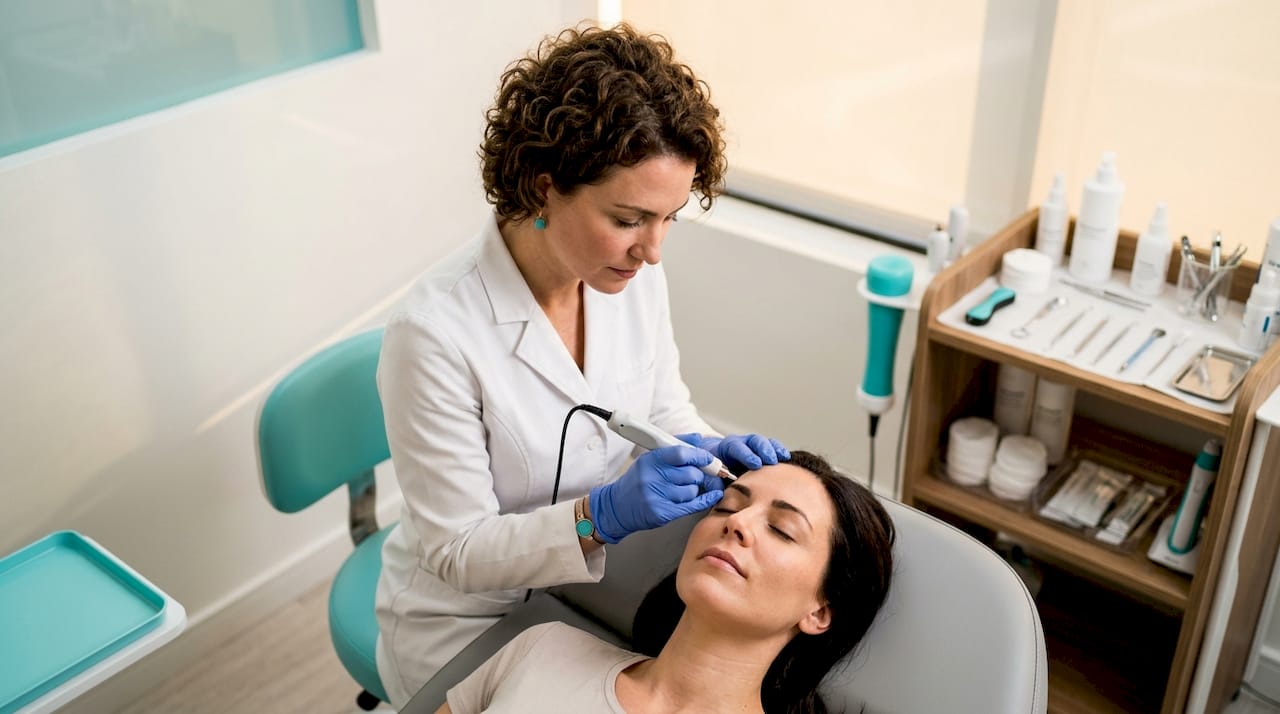
Soft surgery skin tightening is defined as a non-invasive cosmetic procedure that uses low-intensity plasma energy to stimulate the skin’s natural collagen and elastin production, resulting in firmer, brighter, and more youthful skin without surgery or significant downtime. The industry term for this approach is Soft Plasma, sometimes called Baby Plasma, a technology developed by BTI (Biotechnology Institute) that distinguishes itself from traditional plasma treatments by working beneath the surface rather than on it. Unlike surgical facelifts or aggressive laser resurfacing, soft surgery delivers measurable skin rejuvenation with zero to two days of mild redness and no scabbing. For anyone aged 25 to 60 researching non-invasive skin tightening options, this treatment occupies a genuinely useful middle ground between basic facials and more aggressive procedures.
What is soft surgery skin tightening and how does it work?
Soft Plasma works by delivering controlled pulses of plasma energy to the skin, which create temporary microscopic channels in the upper dermal layer. These channels serve two purposes simultaneously. They allow potent serums to penetrate deep into the dermis without needles, and they trigger the skin’s own repair response at a cellular level.
The cellular mechanism is where the real results come from. Plasma energy stimulates fibroblast cells to increase their production of collagen and elastin, the two structural proteins responsible for skin firmness and elasticity. Fibroblasts are the skin’s primary manufacturing units for these proteins, and their activity naturally slows with age. Soft Plasma essentially wakes them back up without causing the surface injury that traditional treatments rely on.
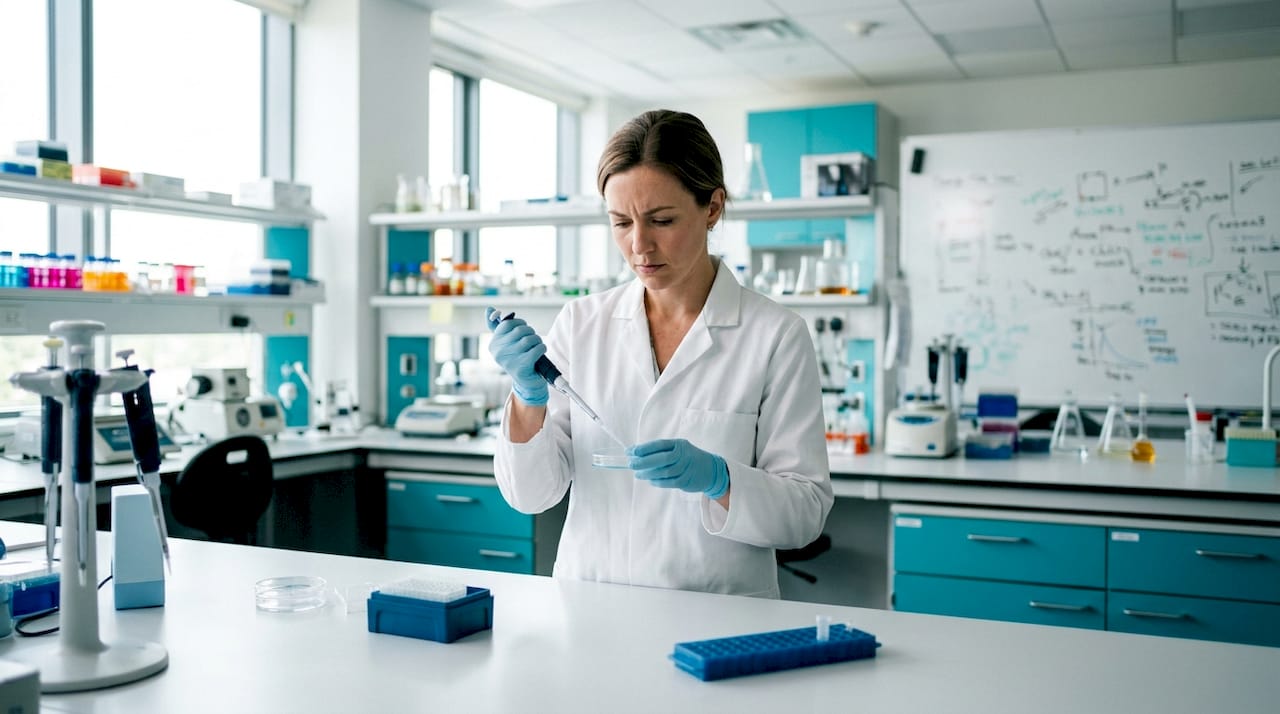
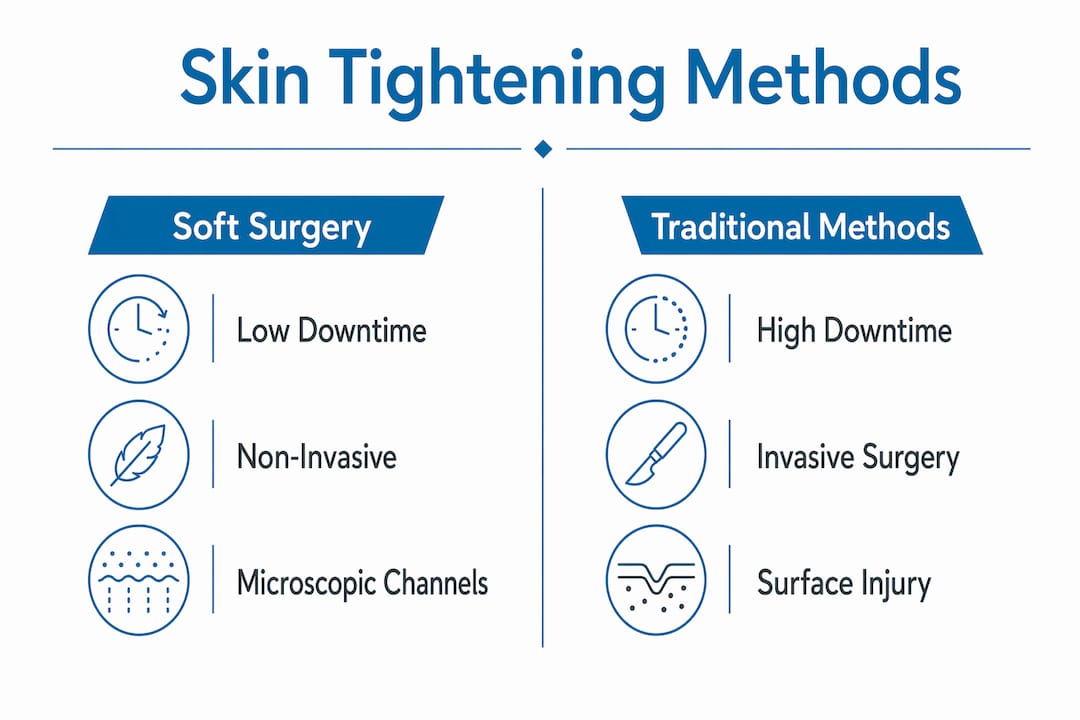
This is the critical difference between Soft Plasma and standard plasma lift treatments. Traditional plasma lifts work by creating controlled surface trauma, which results in visible crusting and a healing period of 7 to 10 days. Soft Plasma achieves collagen stimulation through energy delivery alone, which is why the recovery involves only mild redness for up to two days with no scabbing at all.
Here is what happens during a typical Soft Plasma session:
The skin is cleansed and a topical numbing cream is applied
A specialized handpiece delivers low-intensity plasma pulses across the treatment area
Targeted serums are applied immediately after, penetrating through the open microchannels
The entire session typically takes 30 to 60 minutes depending on the area treated
Mild warmth or tingling during treatment is normal and resolves quickly
Pro Tip: Soft Plasma is particularly well-suited for individuals who want visible results but cannot afford significant social downtime. If your schedule does not allow for a week of visible healing, this energy level is worth discussing with your provider.
One detail that surprises many clients is that Soft Plasma is safe for delicate eyelid areas because it produces no surface heat and no injury. Most laser resurfacing treatments cannot be used safely on the eyelids, which makes Soft Plasma one of the few energy-based options for upper and lower eyelid tightening without surgery. You can read more about how plasma fibroblast treatments achieve these results at a structural level.
How does soft surgery compare to other skin tightening methods?
Understanding where Soft Plasma sits relative to other skin tightening techniques helps you make a genuinely informed decision. The options range from surgical facelifts at one extreme to basic topical creams at the other, with several energy-based technologies in between.
Treatment | Downtime | Invasiveness | Surface injury | Best for |
Surgical facelift | 2 to 4 weeks | High | Yes | Significant laxity |
Traditional plasma lift | 7 to 10 days | Low to moderate | Yes (crusting) | Moderate laxity |
Laser resurfacing | 5 to 7 days | Moderate | Yes | Texture and tone |
Radiofrequency (RF) | 0 to 1 day | Non-invasive | No | Mild to moderate laxity |
Microfocused ultrasound | 0 to 2 days | Non-invasive | No | Deep tissue lifting |
Soft Plasma (soft surgery) | 0 to 2 days | Non-invasive | No | Delicate zones, mild laxity |
Radiofrequency and microfocused ultrasound are the closest comparisons to Soft Plasma in terms of downtime profile. The meaningful distinction is depth and mechanism. Radiofrequency heats deeper tissue layers to contract collagen, while microfocused ultrasound targets the SMAS layer used in surgical facelifts. Soft Plasma works at the dermal level through channel creation and fibroblast stimulation, making it more precise for surface texture, fine lines, and delicate zones.
Research on combined modality treatments shows that layering energy-based approaches produces significantly better outcomes than any single treatment alone. A dual protocol using 675 nm laser and microfocused ultrasound showed wrinkle reduction scores improving from 1.88 to 1.13 and laxity scores from 2.78 to 1.55 after six months. This means Soft Plasma does not have to work in isolation. It can be paired with other modalities for clients who want more pronounced results.
Pro Tip: If you are considering Soft Plasma alongside another energy-based treatment, ask your provider about sequencing. Soft Plasma is often scheduled first in a session because the open microchannels enhance absorption of any serums applied before the second modality begins.
Layering energy-based treatments potentiates collagen remodeling more effectively than single modalities, which is why providers who specialize in non-surgical skin lifting increasingly build multi-treatment protocols around a Soft Plasma foundation. For a broader view of how these options compare, the Luxveritae guide on non-invasive skin treatments covers the full spectrum in detail.
Who is an ideal candidate for soft surgery skin tightening?
Plasma treatments suit clients across a wide range of concerns, from mild skin laxity to more significant texture and tone issues, with protocols tailored to individual goals and downtime tolerance. That said, Soft Plasma specifically performs best for a defined profile of candidates.
The ideal candidate is someone between 25 and 60 with mild to moderate skin laxity, fine lines, uneven texture, or dullness who wants real results without a recovery period that disrupts daily life. Clients in their late 20s and 30s often use Soft Plasma preventively to maintain collagen levels before visible aging accelerates. Clients in their 40s and 50s use it to address early to moderate laxity, particularly around the eyes, mouth, and neck.
Treatment areas where Soft Plasma delivers the strongest results include:
Upper and lower eyelids (an area where few non-surgical options exist)
Perioral lines and lip border definition
Forehead and brow area
Neck and décolletage
Cheeks and jawline for mild tightening
Overall facial brightness and texture improvement
The soft surgery benefits extend beyond tightening alone. Soft Plasma noticeably tightens loose skin while also improving overall skin tone and texture, which means clients often report their skin looks brighter and more even after treatment, not just firmer.
Contraindications to be aware of before booking include active skin infections or open wounds in the treatment area, a history of keloid scarring, pregnancy, and certain autoimmune conditions affecting skin healing. Anyone on blood thinners or photosensitizing medications should disclose this during consultation. A professional assessment at Luxveritae will identify any factors that require a modified protocol or an alternative approach. For context on how aging affects skin and which treatments address specific concerns, the Luxveritae article on skin aging treatment options is worth reviewing before your appointment.
What to expect before, during, and after your treatment
Knowing the full arc of a Soft Plasma treatment removes the uncertainty that often delays people from booking. The process is straightforward and the recovery is genuinely minimal compared to most energy-based alternatives.
Consultation. Your provider reviews your skin concerns, medical history, and goals. This is where your protocol is personalized, including the number of sessions recommended and whether combination treatments make sense for your situation.
Pre-treatment prep. Avoid retinoids, exfoliating acids, and direct sun exposure for at least five days before your session. Arrive with clean skin and no active breakouts in the treatment area.
The session itself. A topical numbing cream is applied 20 to 30 minutes before treatment begins. The plasma handpiece is passed over the treatment area in controlled patterns. Most clients describe the sensation as mild warmth with occasional light tingling. Sessions run 30 to 60 minutes.
Immediate post-treatment. Expect mild redness and slight warmth in the treated area, similar to a light sunburn. This is normal and typically resolves within 24 to 48 hours with no surface crusting.
Recovery and aftercare. Keep the skin hydrated with a gentle, fragrance-free moisturizer. Avoid active skincare ingredients like retinol and vitamin C for three to five days. Sun protection is non-negotiable for at least two weeks post-treatment.
Results timeline. Initial brightness and tightening are often visible within the first week as inflammation settles. Collagen remodeling continues for up to three months, with full results typically visible at the six to twelve week mark.
The question most clients ask at this stage is how many sessions they need. A single session produces visible improvement, but a course of two to three sessions spaced four to six weeks apart delivers the most sustained collagen remodeling. Your provider will recommend a schedule based on your starting point and goals. Combining Soft Plasma with topical skin rejuvenation between sessions also extends and deepens the results.
Key takeaways
Soft Plasma skin tightening is the most practical non-surgical option for individuals who want measurable collagen stimulation, minimal downtime, and safe treatment of delicate facial zones like the eyelids.
Point | Details |
Core mechanism | Plasma energy opens microchannels and activates fibroblasts to produce collagen and elastin. |
Downtime advantage | Recovery is zero to two days of mild redness with no surface scabbing, unlike traditional plasma lifts. |
Delicate area safety | Soft Plasma is one of the only energy-based treatments safe for upper and lower eyelid tightening. |
Best candidates | Adults aged 25 to 60 with mild to moderate laxity, fine lines, or dull texture benefit most. |
Enhanced results | Layering Soft Plasma with other modalities like microfocused ultrasound significantly improves wrinkle and laxity outcomes. |
Why soft surgery deserves more attention than it gets
Most clients who walk into Luxveritae asking about skin tightening have already researched surgical options and decided they are not ready for that commitment. What surprises me is how few of them have heard of Soft Plasma before their consultation. The treatment sits in a genuinely underserved category: effective enough to produce real structural change, gentle enough to treat areas that most devices cannot touch.
What I find most clinically interesting is the eyelid application. The periorbital area ages faster than almost any other part of the face, and the options for treating it non-surgically are limited. Most energy devices carry too much thermal risk for the thin skin around the eyes. Soft Plasma does not. That alone makes it worth understanding.
The combined modality angle is where I see the most exciting results. Clients who pair Soft Plasma with a complementary treatment in a sequenced protocol consistently report better outcomes than those who use either treatment alone. The research on dual-modality protocols confirms what we observe clinically: collagen remodeling compounds when you stimulate it from multiple pathways. The practical implication is that Soft Plasma is not just a standalone treatment. It is a foundation that makes everything else work better.
My honest advice is this: if you are in your 30s or 40s and starting to notice early laxity or dullness, do not wait for the concern to become significant before addressing it. Soft Plasma at that stage is genuinely preventive. The collagen you preserve now is easier to maintain than the collagen you have to rebuild later.
— Lux
Experience soft surgery skin tightening at Luxveritae
Luxveritae specializes in personalized, non-invasive skin rejuvenation treatments designed to deliver real results without surgical risk or extended recovery. Soft Plasma is one of the signature offerings at Lux Veritae Skin Spa, applied with precision protocols tailored to your skin type, concerns, and lifestyle.
Whether you are exploring soft surgery for the first time or looking to build a multi-treatment plan, the team at Luxveritae will assess your candidacy and design a protocol that fits your goals. Browse the full range of treatment packages and pricing to find the right starting point, or book your consultation directly online. Your skin’s next chapter starts with one conversation.
FAQ
What is soft surgery skin tightening exactly?
Soft surgery skin tightening is a non-invasive procedure using low-intensity Soft Plasma energy to stimulate collagen and elastin production in the skin. It is also called Baby Plasma and is distinct from traditional plasma lifts because it causes no surface injury or scabbing.
How long does recovery take after soft surgery?
Recovery from Soft Plasma typically involves zero to two days of mild redness with no surface crusting, compared to seven to ten days of healing required after a traditional plasma lift.
Is soft surgery safe for the eye area?
Soft Plasma is safe for delicate areas including the upper and lower eyelids because it produces no surface heat and no injury, making it one of the few non-surgical options for eyelid tightening.
How many sessions of soft surgery do you need?
A single session produces visible improvement, but most providers recommend two to three sessions spaced four to six weeks apart for sustained collagen remodeling and optimal results.
Can soft surgery be combined with other skin treatments?
Soft Plasma can be layered with other energy-based treatments for enhanced outcomes. Research shows combined modality protocols produce significantly greater improvements in wrinkle and laxity scores than any single treatment alone.
Recommended
Comments