


What Is Cosmetic Skin Artistry? Techniques and Benefits

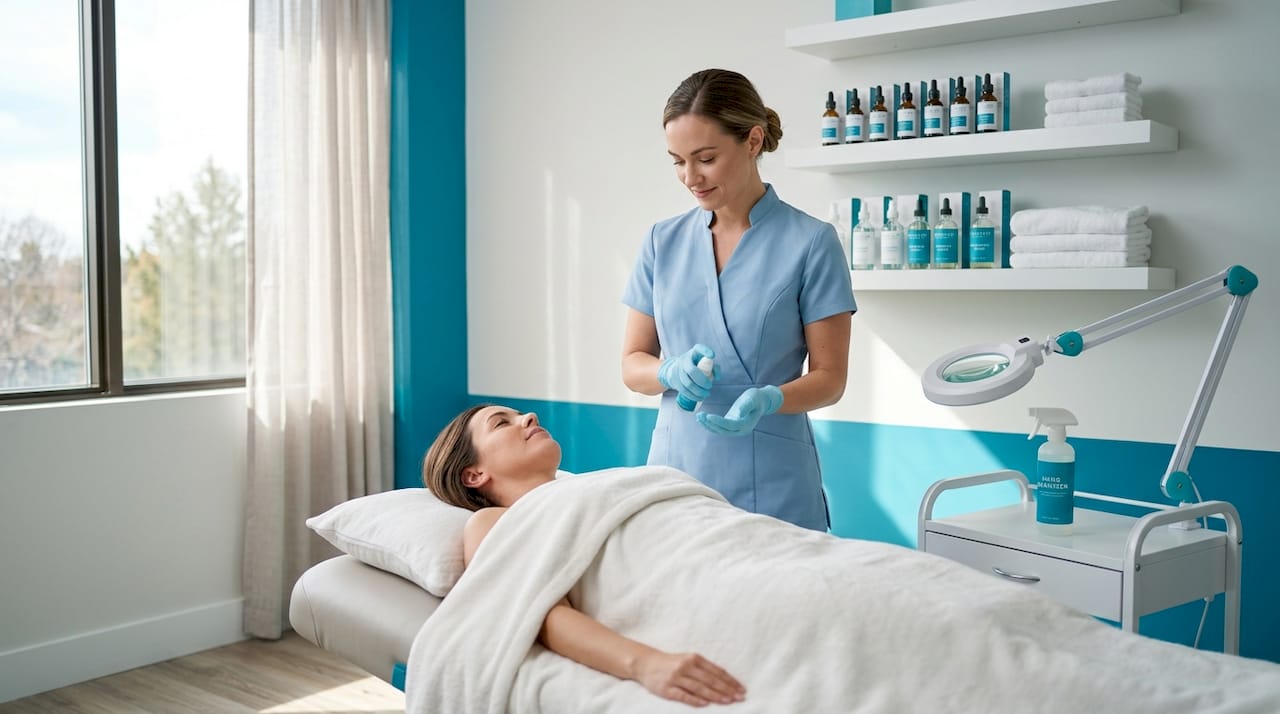
Cosmetic skin artistry is not about covering your face with foundation or getting a basic facial once a year. What is cosmetic skin artistry, really? It is a specialized discipline that blends licensed esthetician expertise with a deep understanding of skin anatomy, treatment science, and personalized aesthetic goals. People often assume it sits somewhere between a spa day and a dermatologist’s office. The truth is more specific than that, and far more interesting. This article breaks down exactly what skin artistry involves, which techniques practitioners use, how the benefits stack up, and how to fold professional treatments into a routine that actually works for your skin.
Table of Contents
Key takeaways
Point | Details |
Skin artistry definition | Cosmetic skin artistry is a licensed esthetician’s practice combining skin science, technique, and personalized aesthetics. |
Not the same as medical aesthetics | Procedures like laser resurfacing are medical. Facials, peels, and nanoneedling fall under cosmetic skin artistry. |
Techniques vary by skin type | Effective treatment starts with thorough skin analysis, not a one-size-fits-all menu. |
Benefits go beyond appearance | Improved texture, collagen stimulation, and confidence are all documented outcomes of regular skin artistry. |
Routines need professional input | Combining at-home skincare with professional treatments produces better, longer-lasting results. |
What cosmetic skin artistry actually means
Most people conflate cosmetic skin artistry with either heavy makeup or a one-time facial. Neither captures what it is. The skin artistry definition refers to a trained, licensed practice in which estheticians use clinical knowledge of skin anatomy alongside refined technique to analyze, treat, and enhance a client’s skin in a way that looks natural and feels purposeful.
Estheticians are licensed skincare professionals trained in skin analysis, facial treatments, exfoliation, extractions, massage, and makeup artistry. That training is the backbone of what separates cosmetic skin artistry from a quick spa visit. An esthetician does not simply apply product. They read the skin, identify its needs, and select the right combination of techniques to produce a specific aesthetic outcome.
Understanding skin artistry also means knowing where its boundaries sit. Cosmetic skin artistry covers:
Facials, including deep cleansing, manual and chemical exfoliation, extractions, and mask application
Non-invasive treatments like microdermabrasion, nanoneedling, and superficial chemical peels
Makeup artistry built on color theory, contouring, and skin-matching techniques
Personalized skincare protocol development based on skin type and condition
What cosmetic skin artistry does NOT cover is equally telling. Laser resurfacing stimulates collagen and restructures skin at a cellular level, but it requires physician-level oversight and sits firmly in the medical aesthetics category. The moment a treatment crosses into tissue alteration at a structural level, it leaves the esthetician’s scope.
Skin analysis is fundamental to cosmetic skin artistry because no two clients have the same skin. A 28-year-old with oily, acne-prone skin needs an entirely different plan than a 50-year-old dealing with sun damage and loss of firmness. The artistry piece comes from reading those differences accurately and translating them into a treatment strategy that delivers real, visible improvements.
Cosmetic skin techniques and what they do
This is where the craft gets specific. The cosmetic skin techniques practitioners use are not interchangeable. Each one targets a different layer of skin, produces different outcomes, and requires a different level of aftercare. Here is how the most common ones break down.
Facials
A professional facial is the entry point of cosmetic skin artistry, but calling it simple undersells it. A well-executed facial moves through cleansing, steam, manual exfoliation, extractions, massage, and targeted serums or masks. Each step has a function. The massage component, for example, increases circulation and supports lymphatic drainage, which directly affects skin tone and depuffing over time.
Exfoliation: manual vs. chemical
Manual exfoliation uses physical tools or granules to remove dead skin cells from the surface. Chemical exfoliation uses acids to dissolve the bonds holding those cells together. Alpha-hydroxy acids like glycolic acid are applied in controlled concentrations to progressively refine skin texture. The difference between the two is not just texture preference. Chemical exfoliation can reach slightly deeper into the skin and produce more uniform results, but it also carries more risk if the concentration is wrong for the skin type.
Chemical peels
Chemical peels are a step up in intensity from routine exfoliation. Peels differ by depth: superficial peels affect only the epidermis, medium peels reach the epidermis and the papillary dermis, and deep peels extend to the midreticular dermis. That depth difference directly affects healing time, results, and risk. A superficial glycolic peel might have no downtime at all. A medium peel using trichloroacetic acid will require days of recovery. Estheticians typically work within superficial to light medium peel territory. Deeper work shifts into medical territory.
Nanoneedling
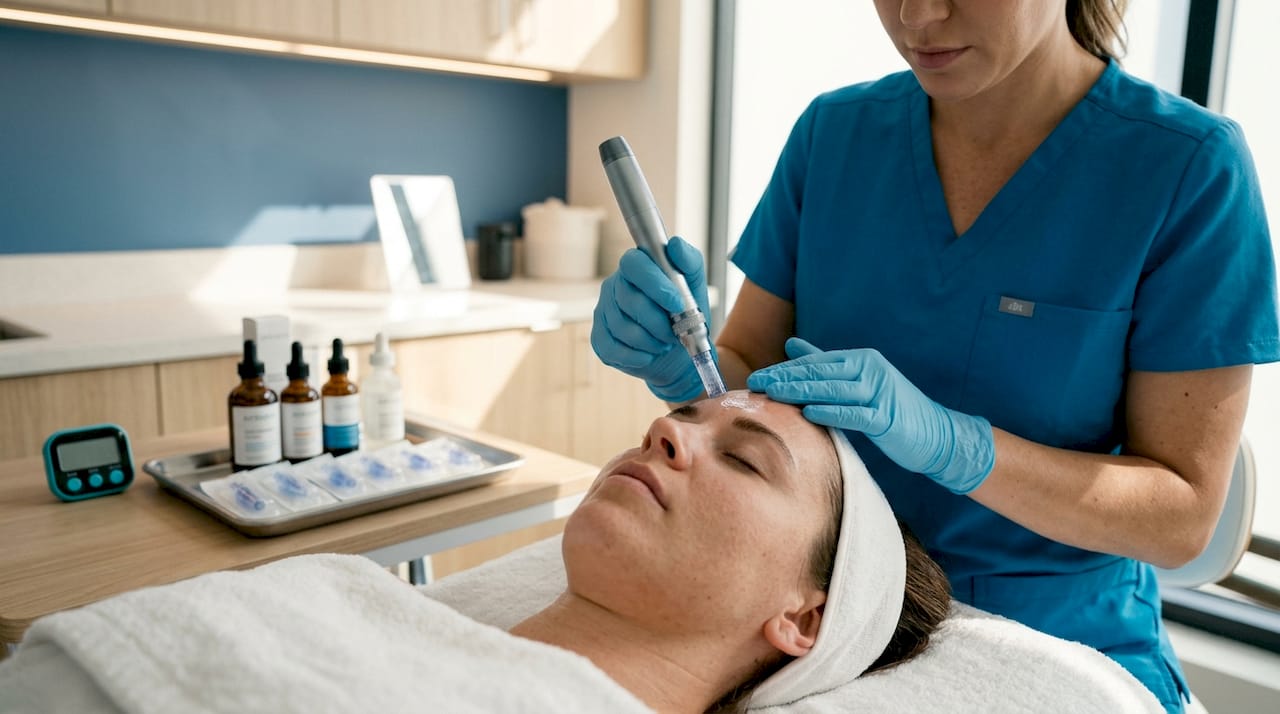
Nanoneedling uses ultra-fine silicone tips to create micro-channels in the very surface of the skin. It is not the same as microneedling, which penetrates deeper. Nanoneedling primarily improves surface skin quality and product penetration rather than triggering deep collagen remodeling. This is worth knowing before booking. If you are expecting dramatic structural change, nanoneedling alone will not deliver that. If you want better absorption of active serums and a more polished surface texture, it does the job well.
Makeup artistry as part of skin artistry
Makeup artistry education covers color theory, contouring, highlighting, and application techniques. When this is executed by a trained esthetician rather than a makeup artist working in isolation, it becomes part of the skin artistry spectrum. The esthetician understands the skin underneath, knows which products will support rather than clog, and applies makeup in a way that complements the client’s actual skin condition.
Pro Tip: Always ask your esthetician whether the makeup products they use are non-comedogenic and how they interact with any active treatments you have recently received. A chemical peel followed by heavy product application can irritate compromised skin.
Benefits of skin artistry: what you actually gain
The benefits of skin artistry are often described vaguely as “glowing skin” or “feeling confident.” That is true, but the mechanisms behind those outcomes are worth understanding, because they shape realistic expectations.
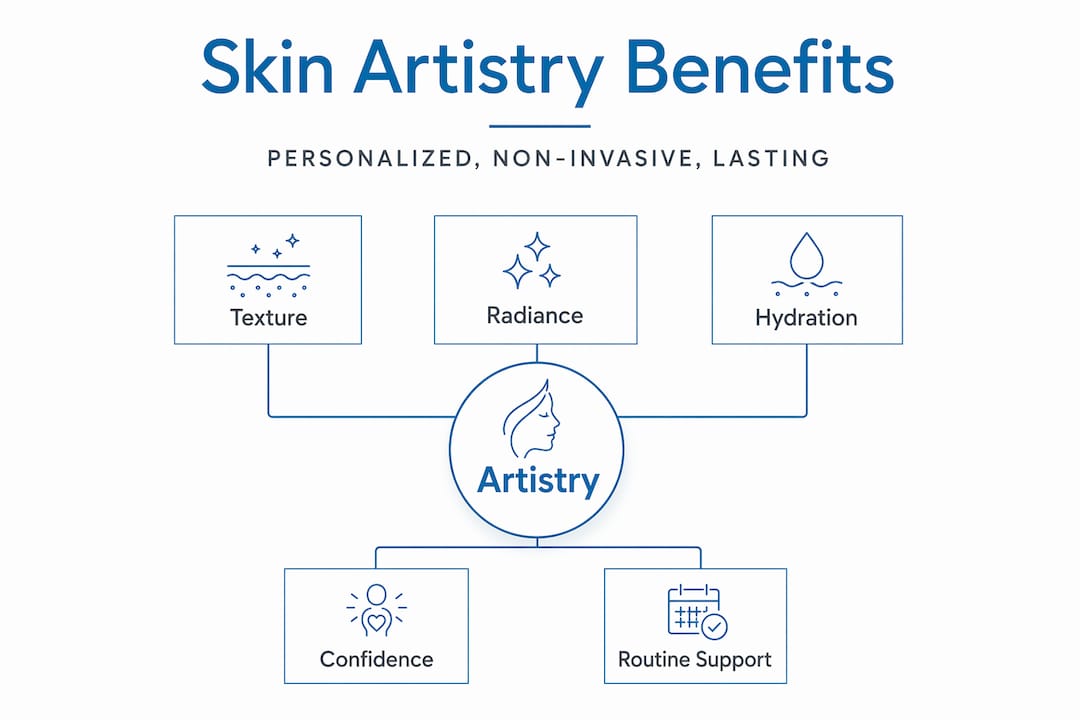
Improved skin texture and radiance. Non-surgical skin treatments like facials and peels improve radiance, texture, and vitality. The mechanism is straightforward: removing buildup, stimulating circulation, and delivering targeted actives produces cleaner, smoother skin that reflects light more evenly.
Reduction of fine lines and creases. Collagen stimulation is a measurable benefit of treatments that create controlled skin stress, such as certain peels and nanoneedling. Cosmetic dermatology uses techniques tailored to individual aesthetic goals, and when collagen production is the goal, the right technique choice matters significantly.
Natural-looking enhancement. Natural-looking improvements rely on precise tailoring of technique to anatomy, not decoration. This is what separates a skilled esthetician from a generalist. The goal is never to mask the skin but to help it function and appear at its best.
Increased confidence and well-being. This one is harder to quantify but consistently reported. Clients who receive regular, personalized skin treatments tend to engage more positively with their appearance. That confidence compounds over time, especially when results are consistent.
One nuance worth flagging: treatment depth selection in chemical peels is carefully balanced to optimize results while minimizing healing time and side effects. More aggressive is not always better. A series of superficial peels spaced appropriately can outperform a single aggressive treatment that leaves skin compromised for weeks. Frequency and consistency often beat intensity.
You can explore non-surgical treatment benefits in more detail to understand which outcomes apply to your specific skin concerns.
Integrating cosmetic skin artistry into your routine
Professional treatments work best when they are not one-off events but part of a deliberate skincare strategy. Here is how to think about that integration.
Scenario | Professional treatment | At-home complement |
Dull, congested skin | Facial with extractions and enzyme mask | Gentle daily cleanser, AHA toner 2x per week |
Uneven texture and tone | Superficial chemical peel series | SPF 30+ daily, vitamin C serum morning |
Fine lines, early aging signs | Nanoneedling with hyaluronic acid serum | Retinol at night, ceramide moisturizer |
Hyperpigmentation | Medium peel (as appropriate) | Niacinamide serum, strict sun protection |
The artistry in cosmetic skin treatments arises from combining deep knowledge of skin anatomy with personalized aesthetic goal setting. That means your at-home routine should reflect the same priorities your esthetician identified during your skin analysis. Buying products randomly without that framework is the most common mistake people make.
Treatments like BB Glow, a semi-permanent skin tint applied via nanoneedling, sit at the intersection of cosmetic skin artistry and advanced pigment work. They require a practitioner who understands both the technique and the pigment’s behavior in different skin types. Your skin type routine should inform which treatments you pursue and in what order.
Pro Tip: Book a skin analysis appointment before committing to a treatment series. A 30-minute consultation that maps your skin type, conditions, and goals will save you from wasting money on treatments that are not the right fit.
Managing expectations is also part of integrating cosmetic skin artistry responsibly. Nanoneedling sessions improve surface skin quality and product absorption more than deep structural change. If you go in expecting microneedling-level collagen remodeling from nanoneedling, you will be disappointed. Your esthetician’s job is to match the technique to the goal, but your job is to communicate the goal clearly.
For clients building a full routine from scratch, a personalized skincare routine that accounts for your skin type is the right starting point before adding professional treatments.
My take on what cosmetic skin artistry really demands
I’ve watched clients come in expecting a single treatment to fix years of sun damage or congestion built up over a decade. What I’ve learned from working closely with skin is that the artistry piece is genuinely underestimated. Anyone can apply a product. Reading skin, choosing the right treatment depth, and sequencing sessions in a way that builds on each other? That takes experience.
In my view, the most underserved area is post-treatment care. Clients spend real money on a peel or a nanoneedling session, then go home and use the wrong products, skip SPF, or layer actives that compromise the results. The treatment is half the work. What you do in the 48 to 72 hours after matters just as much. I’ve seen excellent outcomes ruined by one badly timed retinol application.
The other thing people overlook is that surface-level work and deeper remodeling have fundamentally different timelines. Expecting deep structural change from a superficial treatment, or getting impatient after two sessions of a peel series, is how people end up thinking cosmetic skin artistry “doesn’t work.” It works. But it works on the skin’s schedule, not yours.
— Lux
How Luxveritae brings skin artistry to life
If you are ready to move beyond general information and see what professional cosmetic skin artistry looks like in practice, Luxveritae is worth exploring. Lux Veritae Skin Spa builds every client experience around personalized skin analysis, certified technique, and treatments that are selected for your actual skin. Not a template.
Luxveritae offers treatments ranging from signature BB Glow sessions to advanced paramedical tattooing and scar camouflage. Every result is designed to look natural because the technique is matched to your skin’s specific anatomy and goals. If you want to see the full range and find a starting point that fits your skin, the treatment packages page breaks everything down clearly. You can also book your treatments directly online and get started without the guesswork.
FAQ
What is the skin artistry definition in simple terms?
Cosmetic skin artistry is the licensed practice of analyzing, treating, and enhancing skin using techniques like facials, chemical peels, nanoneedling, and makeup artistry, guided by deep knowledge of skin anatomy and individual aesthetic goals.
How does cosmetic skin artistry differ from medical aesthetics?
Cosmetic skin artistry is performed by licensed estheticians and covers non-invasive treatments. Medical aesthetics involves procedures like laser resurfacing or surgery that require physician-level training and oversight.
What are the main benefits of skin artistry treatments?
The core benefits include improved skin texture and radiance, reduction of fine lines through collagen stimulation, and natural-looking results achieved through technique tailored to your specific skin type and condition.
Can cosmetic skin artistry replace a daily skincare routine?
No. Professional treatments work best when combined with a consistent at-home routine. An esthetician can identify the right products and practices to maintain and extend your treatment results between sessions.
How often should you get cosmetic skin treatments?
It depends on the treatment and your skin goals. A superficial facial series might be monthly, while a chemical peel series is typically spaced four to six weeks apart to allow the skin to recover and respond before the next session.
Recommended
Comments