


How Skin Type Affects Your Tattoo Removal Results

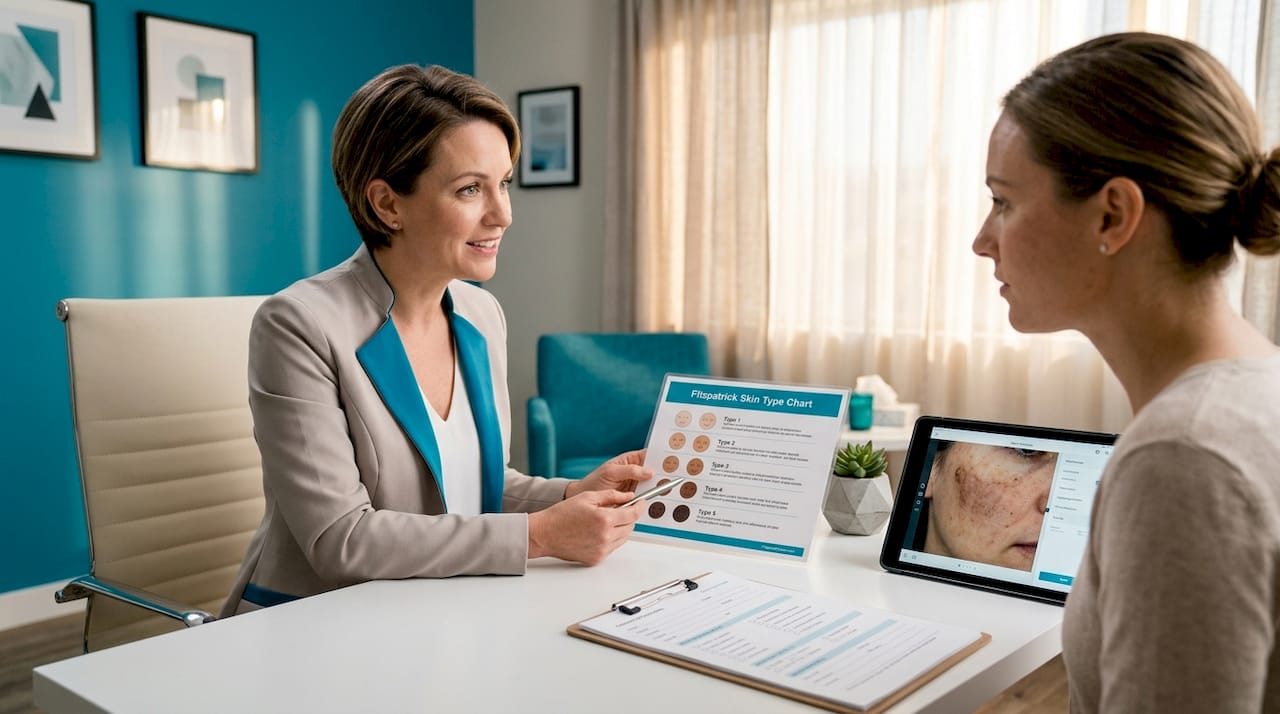
Your skin type determines how safely and effectively laser tattoo removal works on your body. The role of skin type in tattoo removal is not a minor variable. It controls which laser wavelengths are safe to use, how many sessions you will need, and how high your risk is for complications like post-inflammatory hyperpigmentation (PIH). Clinicians use the Fitzpatrick skin phototype scale, a six-tier classification system based on melanin content and UV response, to plan every aspect of your treatment. Understanding where you fall on that scale before you book your first session is the single most useful thing you can do.
How does the Fitzpatrick skin type scale guide tattoo removal treatment?
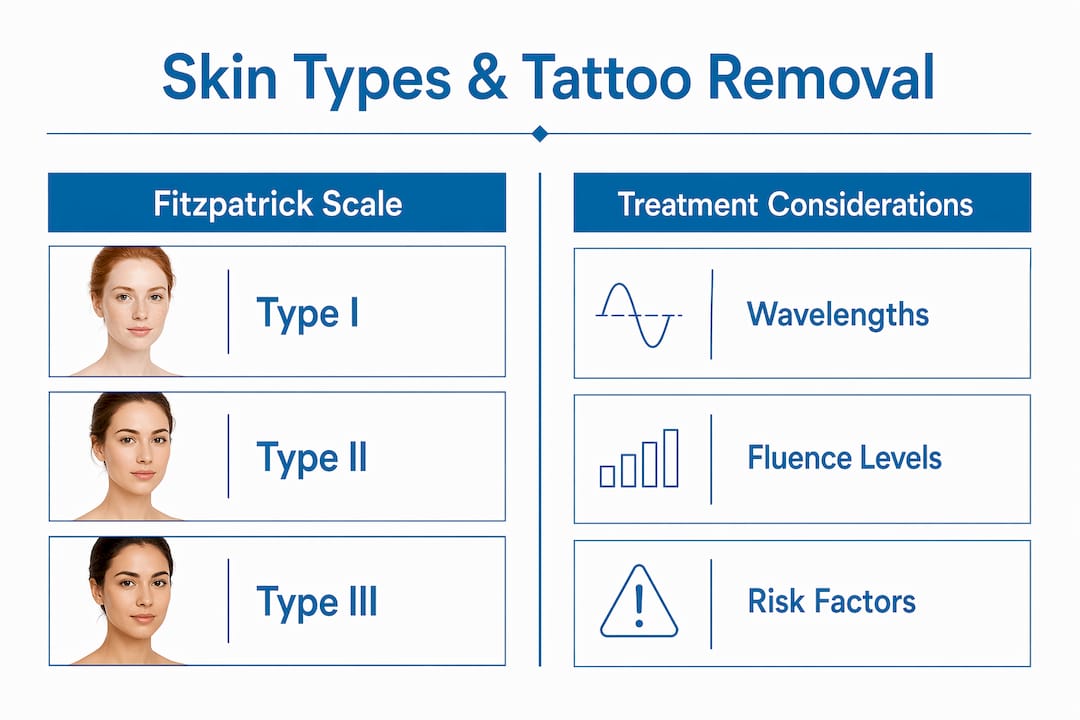
The Fitzpatrick scale divides skin into six phototypes, from Type I (very fair, always burns, never tans) through Type VI (deeply pigmented, never burns). This classification matters in laser tattoo removal because melanin competes with tattoo ink for laser energy. When a laser fires, it targets chromophores. In lighter skin, the dominant chromophore is the tattoo ink. In darker skin, melanin absorbs a significant share of that energy too, raising the risk of thermal injury to surrounding tissue.
The table below summarizes how each Fitzpatrick type translates into practical treatment decisions:
Fitzpatrick type | Skin tone | Laser wavelength | Fluence level | Key risk |
I–II | Very fair to fair | 532nm or 1064nm | Higher fluence tolerated | Minimal PIH risk |
III | Light to medium | 532nm or 1064nm | Moderate fluence | Low PIH risk |
IV | Medium to olive | 1064nm preferred | Conservative fluence | Moderate PIH risk |
V–VI | Brown to deep brown | 1064nm required | Low fluence, longer intervals | High PIH risk |
Lighter skin types (Fitzpatrick I through III) generally achieve faster fading and tolerate stronger laser settings safely. Lower melanin means the laser energy goes almost entirely to the ink, which allows higher fluence and shorter intervals between sessions. Fitzpatrick IV through VI skin requires the opposite approach. Practitioners shift to the 1064nm Nd:YAG wavelength, which penetrates deeper and is less absorbed by melanin, and they reduce fluence to protect the skin’s pigment-producing cells.
Pro Tip: Ask your practitioner to formally document your Fitzpatrick type at your consultation. If they cannot tell you your type or explain how it changes their laser settings, that is a red flag worth taking seriously.
What complications can different skin types face during tattoo removal?
PIH is the most frequently reported complication after laser treatment, and its incidence rises sharply with higher Fitzpatrick types. A 2026 PubMed review of 2,010 cases confirmed that ablative lasers carry higher risks for scarring and infection, while even non-ablative fractional lasers still produce PIH in susceptible patients. This means no laser technology fully eliminates the risk for darker skin. The technology matters less than how it is calibrated for your specific phototype.
A 2026 network meta-analysis from Mahidol University, covering 14 randomized controlled trials, ranked intradermal tranexamic acid (TXA) as the most effective intervention for preventing laser-induced PIH. TXA outperformed sunscreen alone and topical corticosteroids in efficacy, with only mild adverse effects reported. This finding changes the standard of care for Fitzpatrick IV through VI patients. Sunscreen is still necessary, but it is not sufficient on its own.
“Treat tattoo removal sessions on darker skin as controlled injuries. Healing response and inflammation control are paramount to preventing PIH.” — Clinical insight from a 2026 PubMed facial laser complications review.
Here are the evidence-based practices that reduce complication risk across all skin types:
Use conservative fluence settings for Fitzpatrick IV–VI, starting lower than you think necessary and adjusting upward only after observing the skin’s response.
Extend session intervals to 8 to 12 weeks for darker skin types to allow full pigment settling before the next treatment.
Apply broad-spectrum SPF 50 sunscreen daily throughout the entire treatment course, not just on session days.
Consider intradermal TXA injections before or after sessions for Fitzpatrick IV–VI patients, based on the Mahidol University findings.
Use topical corticosteroids post-treatment to reduce inflammation in sensitive or higher-phototype skin.
Monitor for hypopigmentation as well as PIH. Both are real risks, and hypopigmentation (loss of skin color) can be harder to reverse than darkening.
For anyone already dealing with pigmentation concerns, understanding how to treat hyperpigmentation before starting removal sessions gives you a stronger baseline and clearer expectations.
How do skin texture, thickness, and sensitivity affect tattoo removal?
Skin type is not only about color. Texture, thickness, and sensitivity all shape how your skin responds to laser energy and how quickly it heals. Skin thickness and age directly affect healing speed and treatment outcomes. Thicker, oilier skin tends to recover faster and tolerate treatment better. Thinner skin, which is more common in older patients and on certain body areas like the inner wrist or neck, requires gentler settings and longer recovery windows.
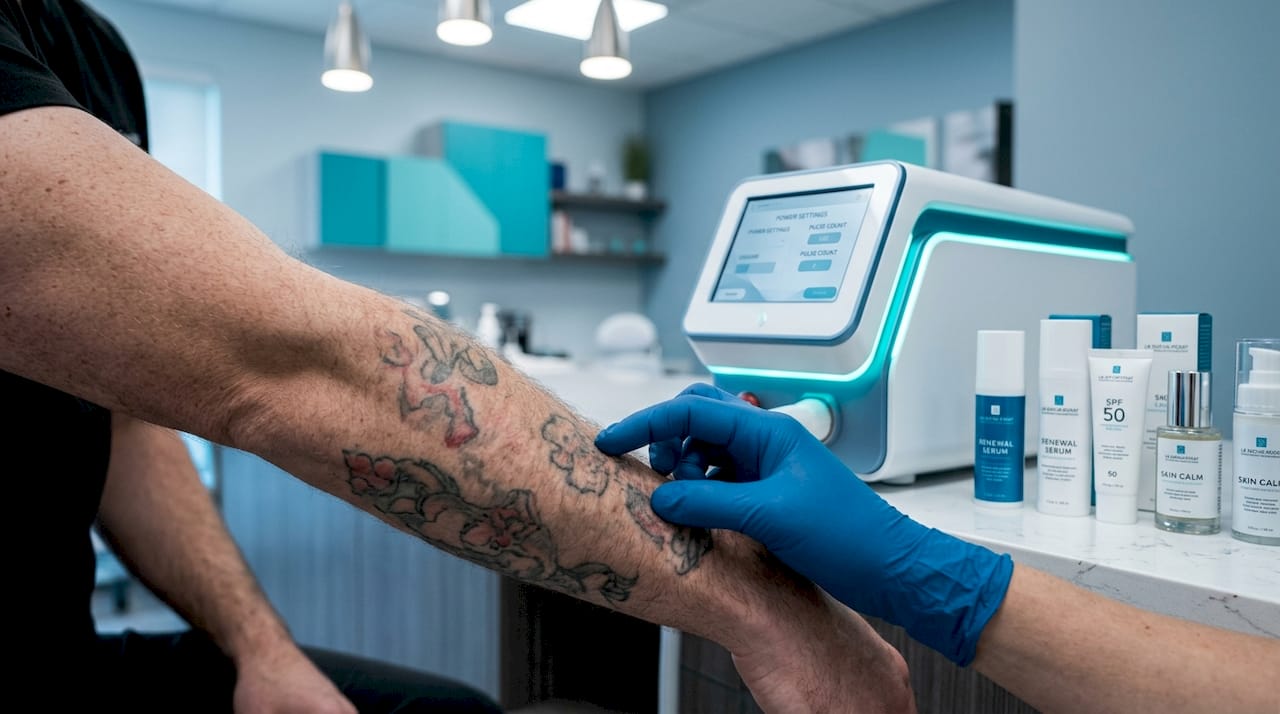
Sensitive skin presents its own set of challenges. Patients with sensitive skin commonly experience more pronounced redness, swelling, and irritation after sessions. Modern laser technology with pre-treatment skin assessment reduces these risks, but only when the practitioner actually performs that assessment rather than applying a one-size-fits-all protocol. Patch testing on a small area of the tattooed skin before committing to a full session is the most reliable way to predict how sensitive skin will react.
Scarred or textured skin within the tattooed area adds another layer of complexity. Scar tissue has different collagen density and vascular supply compared to normal skin, which changes how laser energy disperses through it. Practitioners need to adjust both fluence and spot size when treating over scarred areas. Key factors to assess before treatment include:
Skin thickness at the tattoo site (thinner areas need lower fluence)
Presence of raised or textured scarring within the tattoo
History of keloid formation, which significantly increases scarring risk
Skin sensitivity based on prior reactions to cosmetic treatments or sun exposure
Age-related changes in elasticity and regeneration capacity
What steps should you take before, during, and after tattoo removal?
Preparation and aftercare are as decisive for your results as the laser settings themselves. Patient lifestyle and aftercare adherence including sun avoidance, hydration, and timing can determine whether you get clean fading or a patchy, complicated outcome. The following steps are organized by treatment phase and adjusted for skin type where relevant:
Schedule a formal skin type assessment. Before your first session, have your Fitzpatrick type documented. This drives every subsequent decision about wavelength, fluence, and session spacing.
Avoid sun exposure for at least four weeks before each session. Tanned skin, even from a spray tan, raises melanin levels temporarily and increases PIH risk for all skin types.
Follow session interval guidelines by phototype. Fitzpatrick I through III skin can typically return every 6 to 8 weeks. Fitzpatrick IV through VI skin needs 8 to 12 weeks between sessions to allow full inflammation resolution and pigment stabilization.
Apply SPF 50 sunscreen daily throughout your treatment course. UV exposure increases pigmentation changes and disrupts the lymphatic clearance of fragmented ink particles.
Keep the treated area hydrated. Hydration supports the lymphatic system, which is responsible for clearing the broken-down ink particles from your body after each session.
Avoid irritants during recovery. Retinoids, exfoliating acids, and harsh cleansers should be paused for at least two weeks post-session on the treated area.
Report any unusual pigment changes immediately. Early PIH caught within the first two weeks responds far better to intervention than PIH that has been present for months.
Work only with trained practitioners who adjust parameters per session. Scarring risk comes primarily from excessive fluence or improper session spacing, not from the laser technology itself.
Key takeaways
Your skin type is the single most important variable in determining how safe and effective your laser tattoo removal will be, and ignoring it leads to preventable complications.
Point | Details |
Fitzpatrick scale drives treatment | Your phototype determines wavelength, fluence, and session intervals from the first appointment. |
PIH risk rises with darker skin | Fitzpatrick IV–VI skin faces the highest complication risk; conservative protocols are non-negotiable. |
TXA outperforms sunscreen alone | Intradermal tranexamic acid is the most evidence-backed PIH prevention tool for darker skin types. |
Texture and thickness matter too | Thin, scarred, or sensitive skin requires adjusted settings beyond what phototype alone dictates. |
Aftercare is half the result | Sun avoidance, hydration, and proper session spacing are as critical as the laser calibration itself. |
What I’ve learned treating skin types that don’t fit the textbook
The biggest misconception I see is that lighter skin means easy removal and darker skin means impossible removal. Neither is true. What lighter skin gives you is speed. What darker skin requires is patience and a practitioner who respects the biology rather than rushing toward visible results.
The clients who struggle most are not those with Fitzpatrick V or VI skin. They are the clients with Fitzpatrick III or IV skin who were told they were “close enough to light” to use aggressive settings. That middle range is where PIH catches people off guard, because the risk is real but not obvious at first glance.
The protocols that actually work for higher phototypes combine phototype-aware laser parameterization with planned pigment-risk mitigation, including tranexamic acid and corticosteroids where indicated. That combination, backed by the Mahidol University meta-analysis, is not optional for darker skin. It is the standard of care. Practitioners who skip it are not cutting corners on luxury. They are cutting corners on safety.
My honest advice: if a provider cannot explain how your Fitzpatrick type changes their approach, find one who can. Patience with a proper protocol always beats speed with a careless one. You can also explore the full range of skin discoloration treatments to understand what options exist if pigmentation issues arise during your removal journey.
— Lux
Personalized tattoo removal care at Luxveritae
At Luxveritae, every tattoo removal consultation begins with a formal Fitzpatrick skin type assessment. That assessment shapes the entire treatment plan, from laser wavelength selection to session spacing and PIH prevention protocols. Clients with Fitzpatrick IV through VI skin receive conservative parameter settings, extended intervals, and evidence-based preventive care informed by the latest 2026 clinical research.
Luxveritae’s team specializes in personalized skin rejuvenation, and that same precision applies to removal treatments. Whether you are managing a small cosmetic tattoo or a large multi-color piece, your skin type guides every decision. Book your consultation to receive a customized removal plan built around your skin, your goals, and your timeline. You can also review treatment packages to understand your options before your first appointment.
FAQ
What is the best skin type for tattoo removal?
Fitzpatrick Type I and II skin achieves the fastest and most complete tattoo removal because low melanin allows higher laser fluence with minimal complication risk. That said, all skin types can achieve successful removal with the right protocol.
How does skin tone affect laser tattoo removal safety?
Darker skin tones (Fitzpatrick IV–VI) absorb more laser energy in the melanin layer, which raises the risk of PIH and hypopigmentation. Practitioners address this by using 1064nm wavelengths, lower fluence, and longer intervals between sessions.
Can people with dark skin get tattoo removal?
Yes. Darker skin types require a slower, more conservative approach, but full removal is achievable. The 2026 Mahidol University meta-analysis confirms that combining proper laser parameters with intradermal tranexamic acid significantly reduces PIH risk for Fitzpatrick IV–VI patients.
How many sessions will I need based on my skin type?
Fitzpatrick I through III skin typically needs fewer sessions with shorter intervals of 6 to 8 weeks. Fitzpatrick IV through VI skin generally requires more sessions spaced 8 to 12 weeks apart to allow safe healing between treatments.
Does aftercare differ by skin type?
The core aftercare principles apply to everyone: daily SPF 50 sunscreen, consistent hydration, and avoiding UV exposure. Darker skin types need stricter sun avoidance and may benefit from additional anti-inflammatory topicals to prevent PIH after each session.
Recommended
Comments